A Richmond man saw Parkinson’s coming — and decided to fight back
 Walter Dotts knew this time would come.
At 75, now eight years into his Parkinson’s diagnosis, he doesn’t let the degenerative disease run his life. Instead, he fights it.
“I’m facing a degenerative future, but how stark a future remains to be seen.”says Dotts, a lifelong Richmonder with deep city roots who has spent decades immersed in historic preservation, helping shape projects like the Branch Museum of Design and running a restoration business focused on old homes.
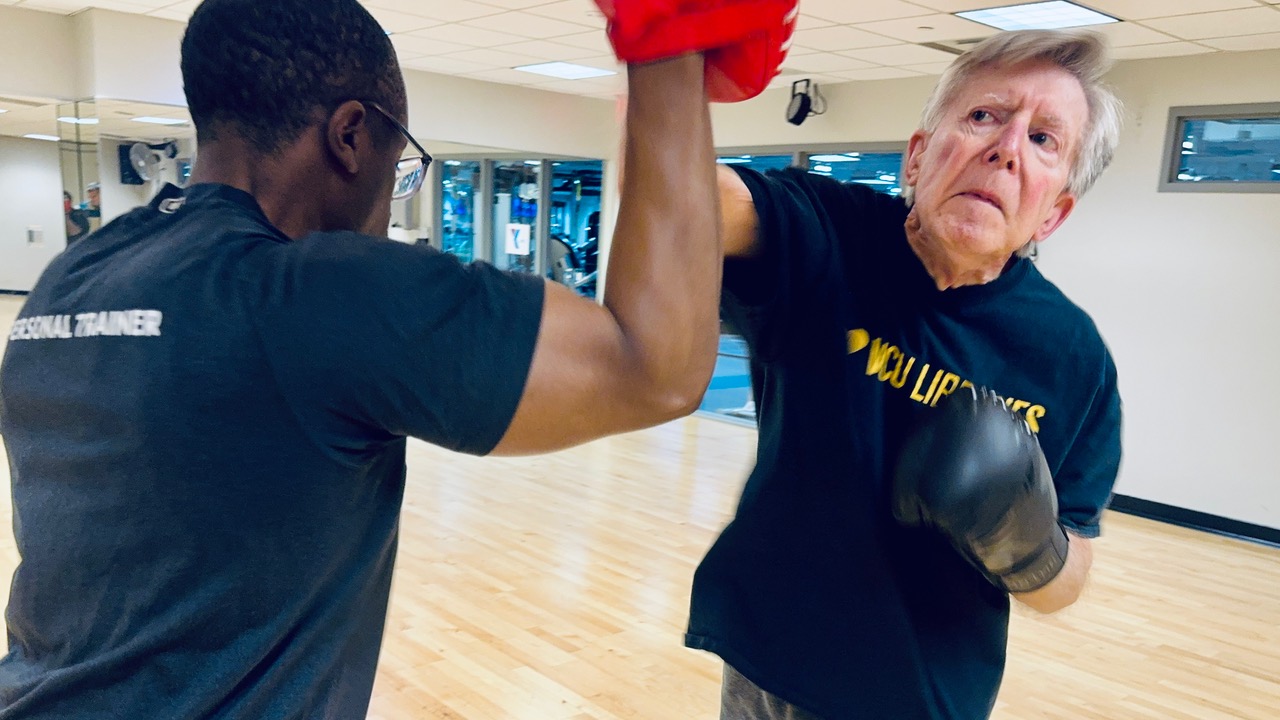
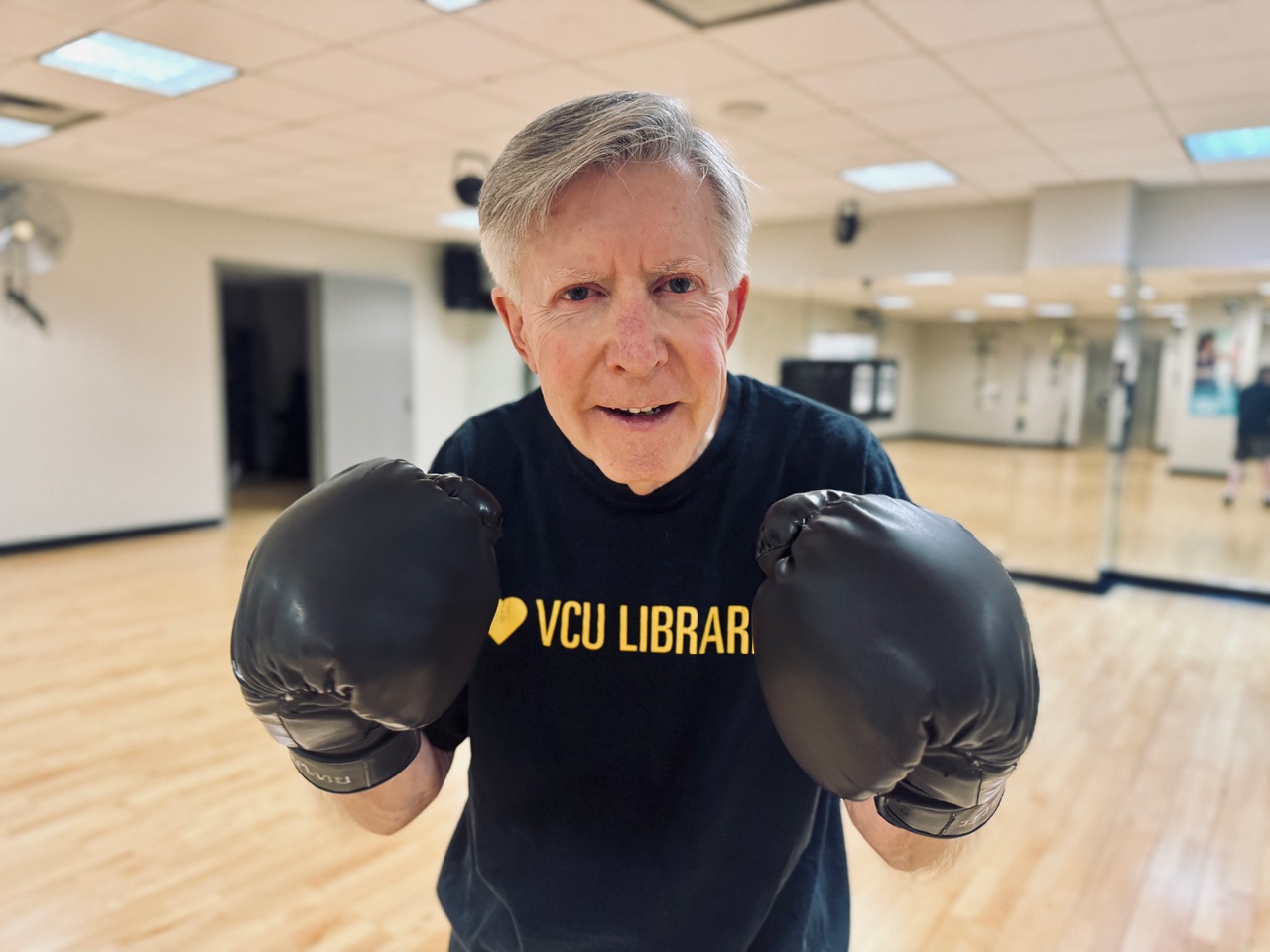
He pushes back with movement — boxing, to be exact. Twice a week, Dotts boxes at the 10th Street YMCA with trainer Anthony Guthridge, working through drills that challenge both body and mind. “He’s taught me to never be defined by your circumstances,” says Guthridge, a VCU graduate who brings a background in exercise science and personal training to the work and is also certified to work with people living with Parkinson’s disease through the American Parkinson Disease Association.
“Anthony has been an integral part of what I consider my therapy,” Dotts says. “He has developed choreography that is rigorous and graceful…with a little danger thrown in. I doubt I would be where I am today physically without his programmatic ability.”
The coordination, balance and quick decision-making required in the ring are more than exercise. Research increasingly backs what Dotts is doing. Exercise is now considered a critical part of Parkinson’s care, shown to improve mobility, balance and even cognitive function, according to the Parkinson’s Foundation. Boxing in particular — with its mix of coordination, speed and strength — has been linked to measurable improvements in both motor and non-motor symptoms, with some programs showing reduced symptom severity after just a few months. While not a cure, evidence further suggests consistent, high-intensity movement may help slow disease progression and preserve function longer.
Dotts believes it has made a measurable difference in both his physical and mental sharpness.
He also had time to prepare. Parkinson’s runs through his family. He cared for his father as he lived with the disease, and his older sister was diagnosed with symptom onset occurring in her 50s. When a tremor appeared in Dotts’ late 60s, he recognized it immediately.
“It really was a self-diagnosis,” he said, later confirmed by Brian Berman, MD, director of the Parkinson’s and Movement Disorders Center.
“What Walter is doing is exactly what we encourage,” Berman said. “Staying active, challenging both the body and the brain, can make a meaningful difference in how people live with Parkinson’s.”
Eight years in, Dotts’ symptoms remain largely limited to some slowness in movement and a tremor in his hands. He leads an otherwise normal and active life, staying involved with VCU’s James Branch Cabell Libraries and the Branch Museum of Design, where his family’s legacy runs deep (he is a descendant of the Branch family).
During an interview, he sat easily on an exercise ball. And when it came time to box, the punches landed with a sharp, rhythmic “BOP! BOP! BOP!” that echoed through the studio.
“One of the things I took seriously is how you can postpone the degeneration as much as possible [with exercise],” Dotts said. “And for me, boxing is how I do it.”