New neurologist brings dual training to expand care for movement and autonomic disorders at PMDC
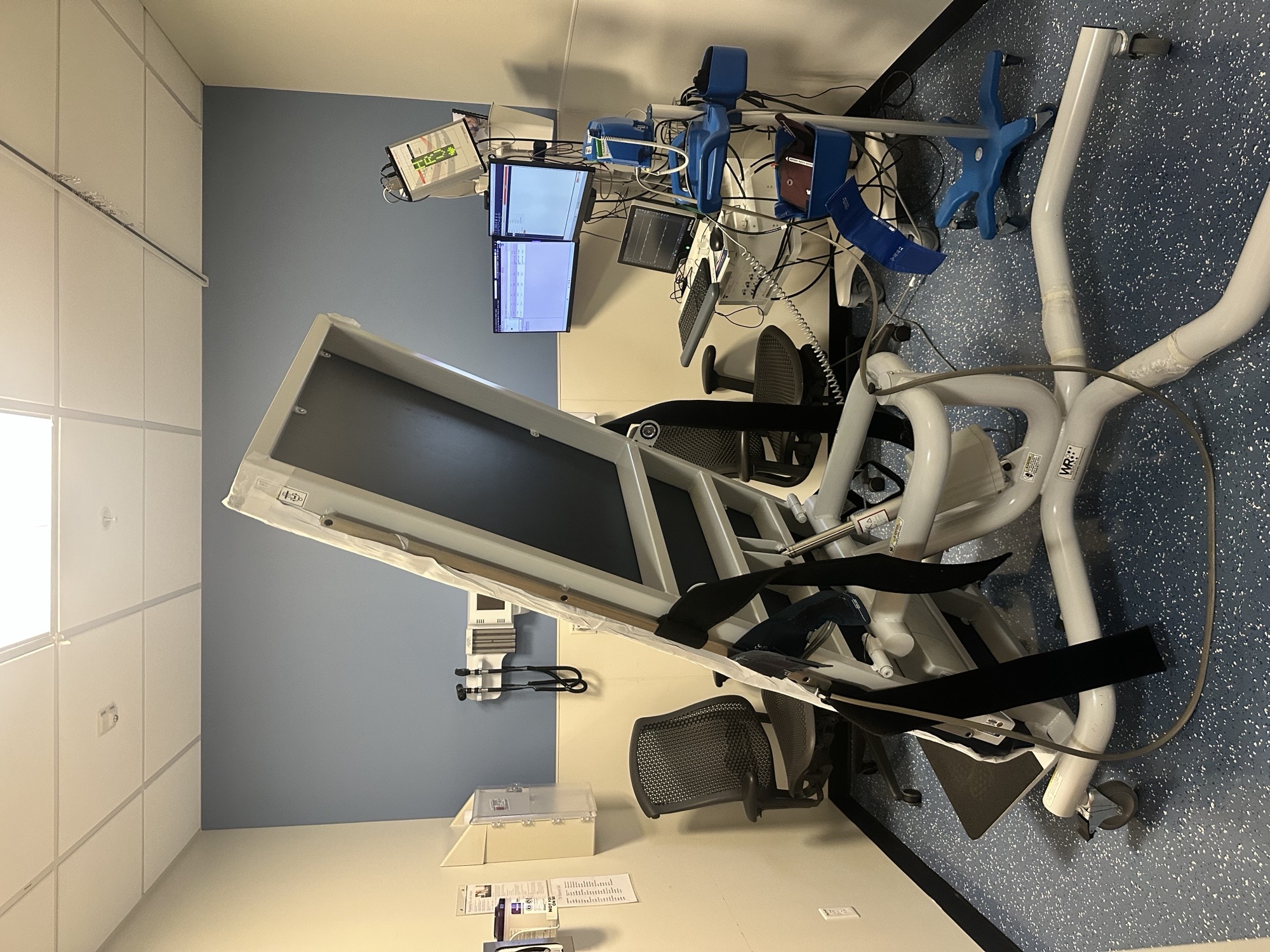
A tilt table used at VCU Health’s Comprehensive Autonomic Center evaluates how a patient’s body responds to changes in position, helping specialists identify autonomic dysfunction and related conditions.
By Dan Carrigan
Patients who experience dizziness, fainting or unexplained symptoms when standing often struggle to find answers. At the VCU Parkinson’s and Movement Disorders Center (PMDC), Abhishek Lenka, M.D., Ph.D., evaluates those conditions through specialized testing and coordinated care designed to identify the cause and guide treatment.
Lenka joined VCU Health in January 2026. He treats patients across two specialized areas of neurology, combining expertise in movement disorders and autonomic dysfunction to address conditions that affect multiple systems in the body.
“There’s a lot of overlap between two of my areas,” Lenka says. “Many patients with movement disorders — especially those with Parkinson’s disease, multiple system atrophy and dementia with Lewy bodies — can have autonomic dysfunction.”
Lenka completed a fellowship in movement disorders at Baylor College of Medicine before pursuing additional training in autonomic disorders at the University of Texas Southwestern Medical Center, where he most recently practiced. He trained in neurology at MedStar Georgetown University Hospital and attained his Ph.D. in India at the National Institute of Mental Health and Neurosciences.
At VCU Health, in addition to the PMDC, Lenka is also a part of the Comprehensive Autonomic Center (CAC), a program established by Thomas Chelimsky, M.D., to address conditions that are often underrecognized and difficult to diagnose. Autonomic disorders affect how the body regulates essential “automatic” functions such as blood pressure and heart rate regulation, sweating, bowel and bladder functions.
Patients with autonomic dysfunction commonly experience lightheadedness, near-fainting episodes, abnormal sweating, digestive issues or exaggerated heart rate response while standing. Because these symptoms can appear unrelated, patients often arrive after searching for answers.
“It’s more underdiagnosed and underrecognized than someone may think,” Lenka says.
Care at the CAC often begins with a comprehensive evaluation supported by advanced testing. In just a couple of hours, patients may undergo tilt table tests and autonomic function assessments to measure how the body responds to changes in position and stress. These evaluations help identify dysfunction that may not be visible during routine exams.
Lenka says early identification can improve both quality of life and long-term outcomes: “It’s very important to identify these patients early and treat them promptly.”
A multidisciplinary VCU Health model supports that work, bringing together specialists from neurology, physical medicine and rehabilitation, clinical psychology and other fields to evaluate patients in a coordinated setting. In many cases, patients can be seen by multiple providers during a single visit.
“It’s kind of a one-stop solution,” Lenka says.
Lenka’s patient-first approach focuses on identifying the underlying cause of symptoms and managing how the body responds over time. He says, “In patients with movement and autonomic disorders, several systems of the body are affected. Therefore, it is crucial to take care of the person as a whole. A 360-degree view is extremely important.”
The opportunity to work across both movement disorders and autonomic dysfunction brought Lenka to VCU Health, which is one of the few health systems with strength in both areas. The team-based environment has stood out early in his time serving patients from the Richmond area and beyond.
“VCU has excellent colleagues,” Lenka says. “There’s a very good collaborative atmosphere here. Not many centers have both of these branches at a high level, and VCU is one of those centers.”